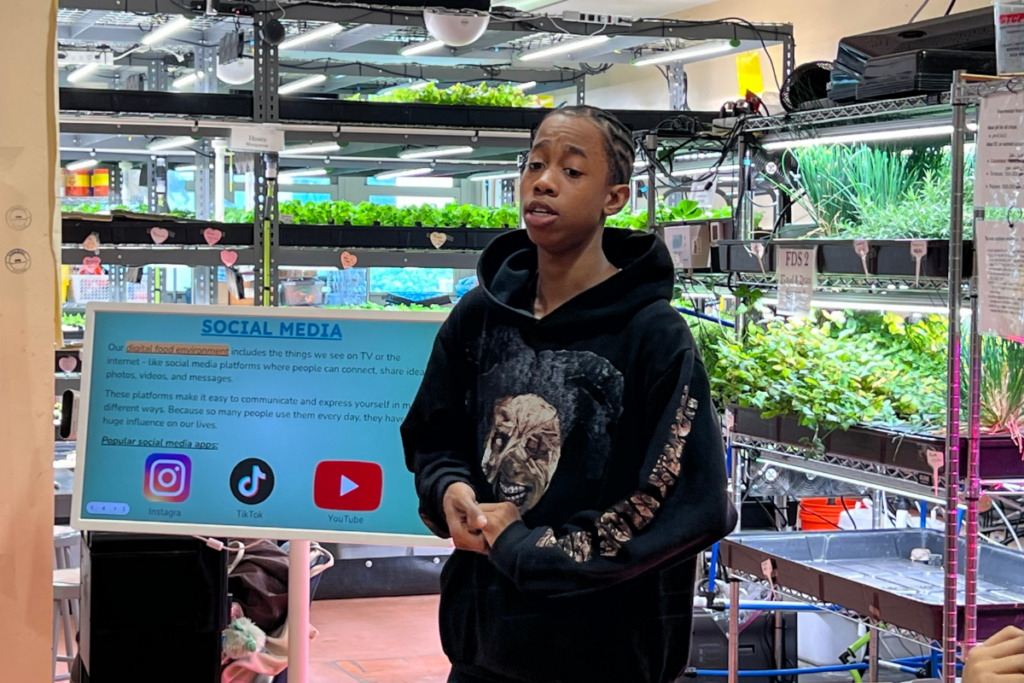

[In the photo above: A Food Policy Program student presenting their slideshow at the cohort’s culminating event.]
By: Pamela Honey
On June 2, eight students from the Far Rockaway Educational Campus (FREC) gathered at the hydroponic farm to mark the end of the first Food Policy Program cohort in Far Rockaway. The culminating event was the final step in a program that asked students to examine the systems that shape what people eat and to build something based on what they learned.
The cohort drew from three high schools on FREC: two students from the Academy of Medical Technology (AMT), two from the Queens Institute of Research and Technology (QIRT), and four from the Frederick Douglass Academy (FDA VI). The program was co-led by Penelope Ramos, an AMT teacher, and TFFJ’s Jessenia Preciado, Far Rockaway Regional Manager; Paloma Jones, Senior Youth Development Coordinator; and Renae Cairns, Senior Program Manager.
What the program explored
The Food Policy Program introduced students to the concept of food environments: the physical and digital conditions that shape what people have access to and what they choose to eat. Using the city, the school campus, and its farm as starting points, students examined how different spaces create different relationships to food.
By the second half of the program, the cohort had chosen to focus specifically on digital food environments: how food-related content on social media influences the choices people make about food. They analyzed what they saw online, debated its effects, and used that work as the foundation for their project at TFFJ’s 2026 Student Leadership Conference. There, they polled fellow students about the food content they encountered on social media, whether they found it positive or negative, and what kinds of content they wanted to see more of.
A student-designed event for younger students
The Food Policy Program’s culminating event extended that project to a different audience: middle school students who attend afterschool programming at the farm. The cohort designed the entire session themselves, with those younger students in mind.
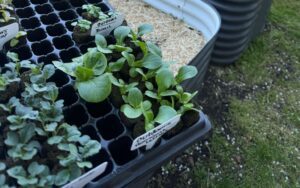
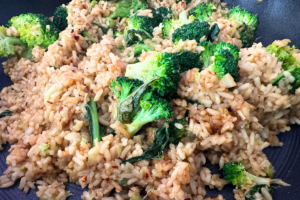
They built a slideshow presentation about the program, created a trivia game, and opened a conversation for middle schoolers to share their own experiences and opinions. Prizes for the trivia game included handmade keychains and 3D-printed pots, made by a QIRT student who runs a 3D printing business out of the school, along with potted seedlings grown on the farm. Every student could also take home a 3D-printed pot if they wanted one. The event ended with a social media-inspired meal: chipotle-style burrito bowls made with produce grown at the farm.
The significance of this first cohort
The Food Policy Program has run at other TFFJ sites, but this was its first time in Far Rockaway. The program asks students to examine who decides which foods are available in their neighborhoods. On the Far Rockaway peninsula, an area historically affected by food insecurity, students studied that system directly, in a community where grocery options remain limited and fresh produce isn’t always within reach.
The fact that this first cohort included students from all three high schools on the FREC campus also reflects how the program works. It isn’t built around a single school or a single academic track. These eight students came from different programs, with different interests and backgrounds, and they built a shared project from the questions they had in common.
The students researched a topic and presented it at TFFJ’s 2026 Student Leadership Conference. They then redesigned it for a younger audience at their own school farm. That arc is what the program is built to do: prepare young people to analyze food systems and act on what they learn.❦
Pamela Honey is the Communications & Content Coordinator at Teens for Food Justice.