
By: Pamela Honey
TFFJ Spotlight: Mariah Middlebrooks,
Farmer-Educator (Denver, CO.)
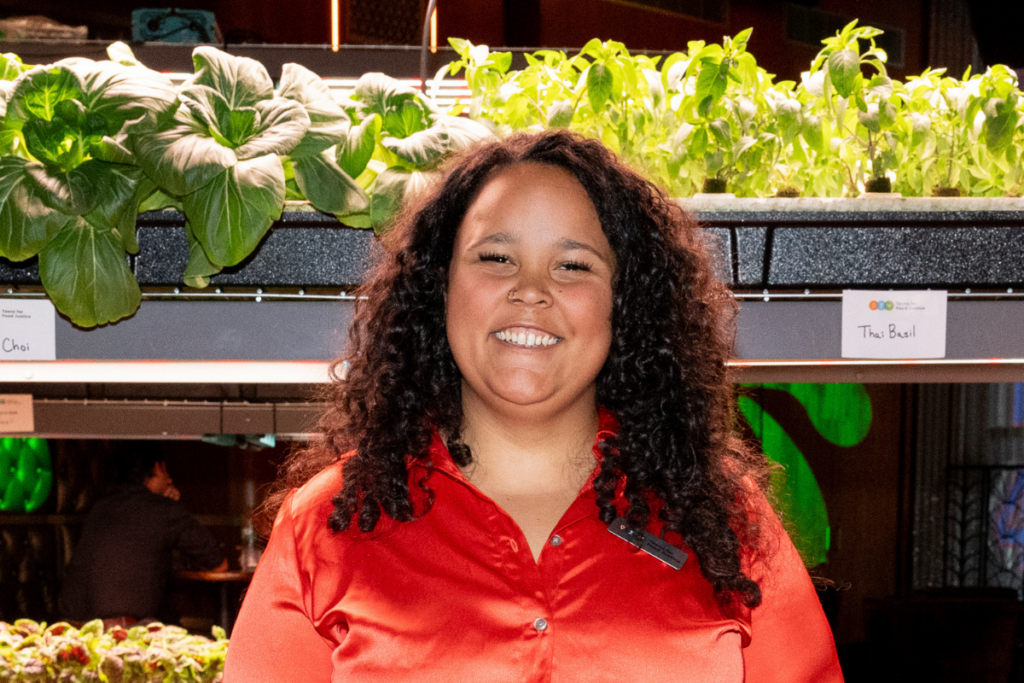
Mariah Middlebrooks grew up near Bruce Randolph School (BRS) in Denver, Colorado, in a neighborhood with a long history of limited food access and environmental pollution. Today, she runs the hydroponic farm inside it as a farmer-educator with Teens for Food Justice.
She came to that role by way of an unexpected path: four years teaching special education at Bruce Randolph, assisting the school’s previous farmer-educator in her free time, and spending a semester with Sustain Ed, a local partner focused on gardening and crop cultivation, where she built her growing skills from the ground up. When Bruce Randolph came back to her, asking if she’d manage the farm full-time, she said yes.
Mariah now manages all growing operations at BRS as its farmer-educator, partnering with TFFJ to build a just food system through student-led agriculture. She works with agriculture classes and special education students. Students handle harvesting, planting, transplanting, system cleaning, and data maintenance. The food goes into school meals, community distribution through Denver Food Rescue, and a monthly mobile market in the school parking lot. “On a perfect day, I don’t do anything in the farm that I don’t need to do,” Mariah said. “The kids are doing everything. We want them to have as much ownership over growing operations as we can.”
“The kids are doing everything. We want them to have as much ownership over growing operations as we can.”
How students learn by doing
Bruce Randolph’s short class periods mean students spend their time on farm work rather than separate lessons. Each agriculture class comes once a week. Students cycle through at the start to decide if they want to work in the farm. Students who choose to participate learn the full growing cycle: where to find red leaf lettuce in the system, how to harvest and clean it, how to reset or seed it, and how to use the germinator. Week by week, they become self-sufficient enough to work without her in the room.
TFFJ’s curriculum gets shared with Bruce Randolph’s science team and complements the agriculture classes, which cover similar ground. Conversations about food justice and food access happen throughout the work rather than in dedicated lesson time. The school’s structure builds those concepts in. Class periods are calm spaces where students focus on one task while talking with friends and listening to music. “I want them to enjoy their time in here because it is a choice,” Mariah said.
Building food access in Denver
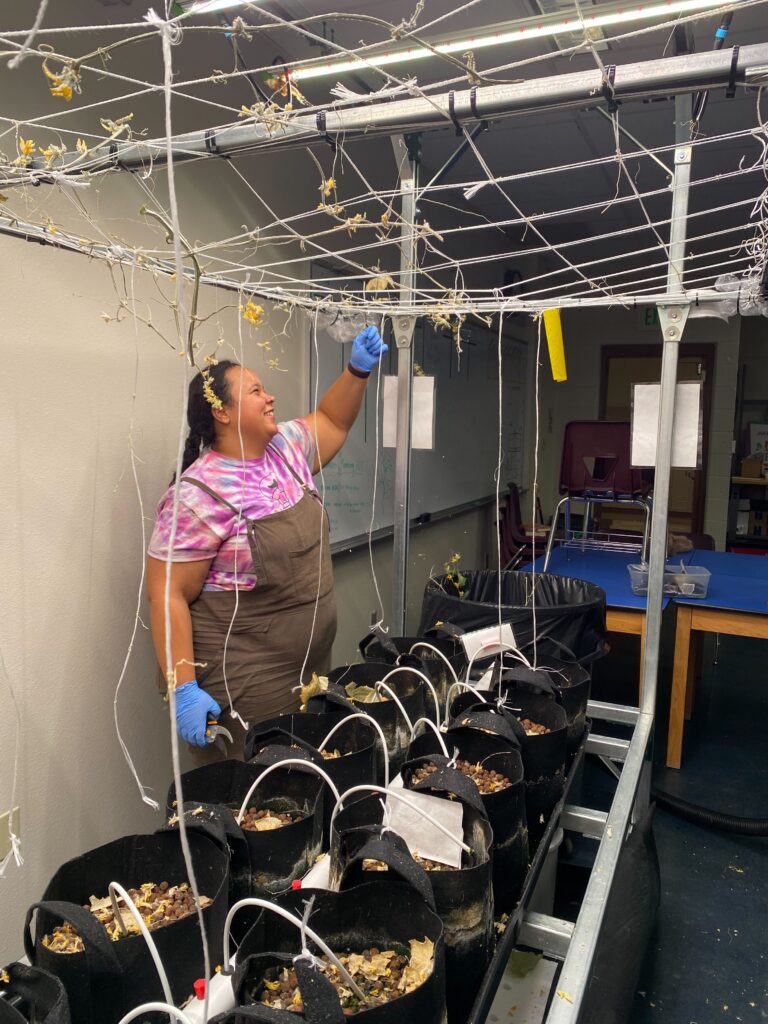
Bruce Randolph operates differently from most TFFJ partner schools. Mariah works independently without a co-educator or on-site farm support. She manages plumbing, electrical issues, and plant cultivation. Every morning, she inspects systems such as lights, water levels, nutrient balance, and plant health. When something malfunctions, she repairs it and reports to TFFJ’s farm operations team. This farm can yield up to 8,000 pounds of food annually at full capacity. Mariah also trains intern students to assist her with tasks like fixing lights or checking water levels.
Mariah explains to students where their harvests are sent. Monday batches supply the cafeteria, while Wednesday harvests are delivered to We Don’t Waste for citywide distribution. Each plant has a specific destination. She grew up near Bruce Randolph, an area known as a food desert with a history of pollution. Distribution partners help broadcast food throughout Denver.
“You can’t have food justice without sustainability,” Mariah emphasized. “They must go hand in hand, or else we’re just contributing to the problem. Overproducing and wasting food makes us no different than a typical grocery store.”
How farmer educators create pathways
The farmer educator role is essential to TFFJ’s success. Without someone tending the farm daily—teaching students about the full growing cycle, managing systems, and linking harvests to their destinations—the farm ceases to produce food. At Bruce, students are mainly Latinx and Black. Mariah stands before them, showing that they can choose their food, grow it themselves, and pursue careers in agriculture and horticulture. Her consistent presence and guidance foster new possibilities for students.
One intern wrote a paper on food access this year and received a $10,000 scholarship. A 2023 graduate is attending Colorado State University on a full scholarship to study agriculture. These results are possible because a farmer educator shows up, plans the crop calendar with TFFJ’s team, selects distribution partners, and empowers students with hands-on food production. Her principal gives her leadership over the program.
“I do this work because I care about where I live. I care about my kids. I care about this community,” Mariah said. “My heart and my mind is for this community, for these kids, and giving them a better opportunity when it comes to food and this field.”❦
Pamela Honey is the Communications & Content Coordinator at Teens for Food Justice.