
By: Aliya Brown
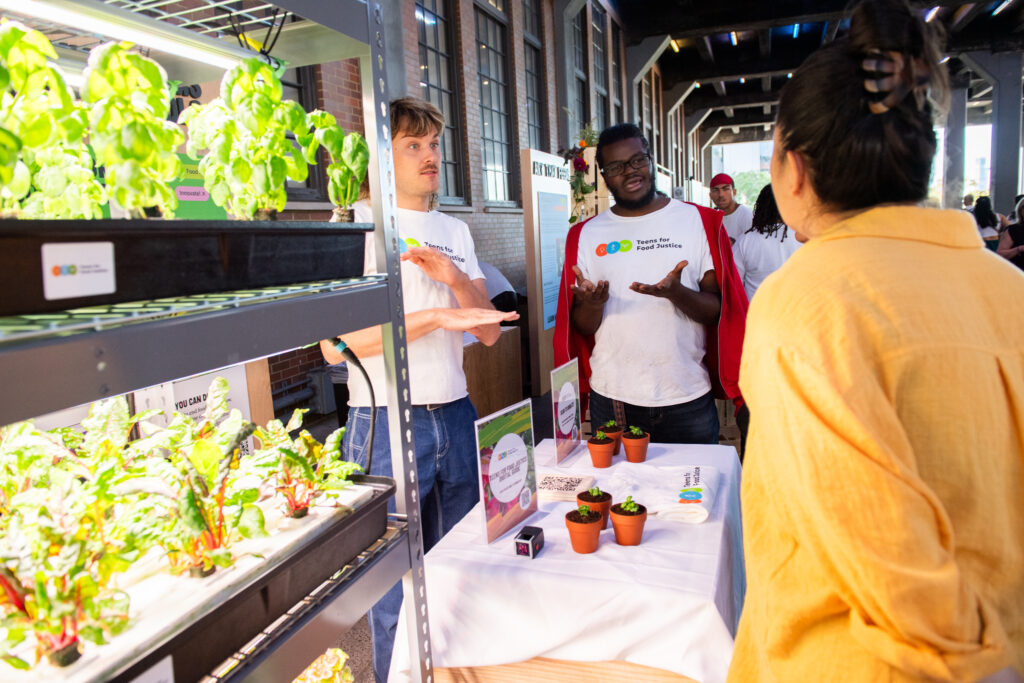
In the face of climate chaos and the growing challenges in the agricultural landscape, hydroponic farming and urban agriculture shine as beacons of hope, particularly in addressing the issue of food insecurity. These innovative approaches not only provide sustainable solutions but also empower communities to take control of their food sources. That’s why Teens for Food Justice was proud to be chosen as one of just 15 exhibitors at the inaugural Emerson Collective Climate Science Fair during UN Climate Week this fall showcasing innovative solutions to both environmentally sustainable farming and food security.
In food deserts, where access to fresh and nutritious produce is limited, hydroponic farming offers a transformative alternative. By cultivating crops without soil and utilizing nutrient-rich water solutions, hydroponics allows for the efficient and year-round production of fruits and vegetables. This method not only maximizes space but also minimizes water usage, making it an environmentally friendly choice in the face of water scarcity concerns, and turbulent outdoor or soil-based growing conditions.
Urban agriculture, on the other hand, brings the farm to the city, turning vacant lots and rooftops into flourishing gardens. As in Teens for Food Justice’s model, reimagining unused or underutilized spaces in schools provides an innovative twist on urban farming, one that provides deeper nutrition education to students, provides healthy food to school cafeterias and all students, distributes healthy affordable food to local communities, and empowers the next generation of the green sector economy. This not only reduces the carbon footprint associated with transporting produce but also strengthens community bonds. Localized food production and distribution contributes to food security, ensuring that nutritious options are within reach for everyone, irrespective of their socioeconomic status.
As climate change intensifies, traditional farming practices face unprecedented challenges, from extreme weather events to shifting growing seasons. Hydroponic farming, with its controlled environment, allows for adaptability, providing a reliable source of fresh produce regardless of external conditions. Urban agriculture, by decentralizing food production, creates resilient local food systems that are less susceptible to disruptions.
The integration of hydroponic farming and urban agriculture goes beyond just addressing the symptoms of food deserts; it tackles the root causes by fostering economic opportunities and promoting self-sufficiency. Community gardens, greenhouses and high-capacity hydroponic farms can serve as educational hubs, teaching valuable skills and inspiring a new generation of environmentally conscious growers.
Hydroponic farming and urban agriculture stand at the forefront of a sustainable and resilient future for food production. By mitigating the impact of climate change, improving food accessibility, and fostering community engagement, these methods offer a blueprint for transforming food deserts into flourishing oases of health and sustainability. By embracing these innovative approaches, we can cultivate a future where no community is left behind in the abundance of fresh, nutritious food.
Aliya Brown is the Senior Communications & Content Manager at Teens For Food Justice.