
TFFJ Spotlight: Candice Green, School Partner
Candice Green’s approach to her role is straightforward: if a student or family needs it, it should be available inside the school building.


Student-grown produce goes directly into school cafeterias, where it is served as part of daily meals. TFFJ works with cafeteria managers at each campus to grow crops that meet their needs, putting fresh food on students' plates during the school day.

Families connected to TFFJ school campuses receive fresh produce through on-site distribution. Students prepare and distribute take-home bags directly on campus, giving families access to student-grown food without leaving their school community.

TFFJ works with community organizations to move produce into neighborhoods where food access is limited. These partnerships extend distribution beyond school walls, reaching families and residents through channels already active in their communities.

Candice Green’s approach to her role is straightforward: if a student or family needs it, it should be available inside the school building.
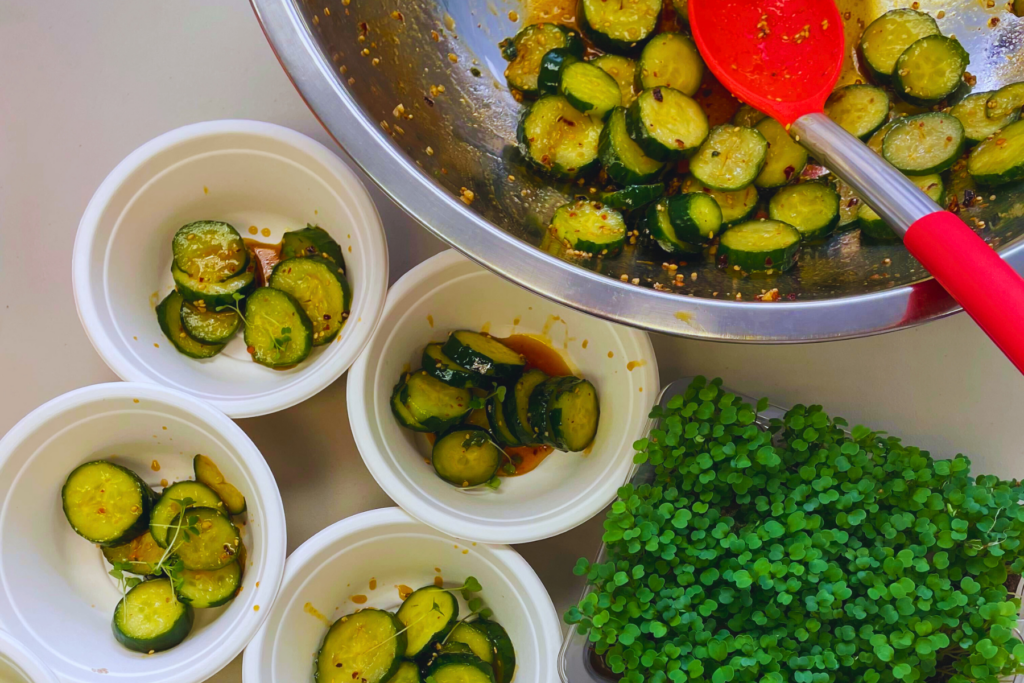
Cooking looks different for every household and community.
For those preparing food without a full kitchen, these no-cook recipes offer simple and delicious ways to use fresh greens.

Connecting Students, Farms, and Fresh Food | At DeWitt Clinton High School, the cafeteria and the Teens for Food Justice farm work hand in hand. Students grow the lettuce, and Ms. Karla Jean Peterkin-Taylor makes sure it reaches their plates. As the school’s cafeteria manager, she’s seen how the farm shifts students’ attitudes toward food—from hesitation to pride.
We use cookies to see how the site is used so we can improve it. You can accept or decline. Declining will not affect how the site works or your ability to donate. Read our Cookie Policy