Grow food using hydroponic systems and explore how farming connects to culture, community, and food justice. Develop cooking skills by preparing recipes that reflect their own traditions and by contributing to community food distributions. Design and present food justice projects that address real-world issues in their local food system.
Students take on the full cycle of farm operations: seeding, monitoring plant growth, harvesting, and preparing produce for distribution to campus families and community members. They develop technical skills in hydroponic systems, plant biology, and sustainable food production.
"The initiatives undertaken by TFFJ in these schools generate significant educational benefits that resonate throughout the community, simultaneously offering essential resources to vulnerable adults."
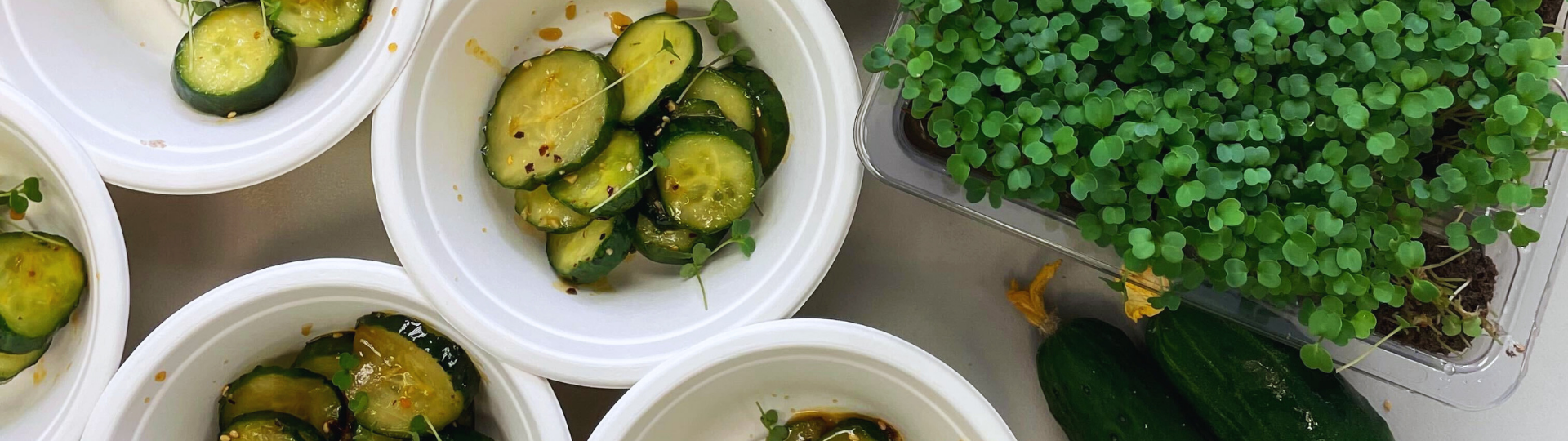
Students use produce from the farm to prepare and share culturally relevant recipes. They build practical cooking skills, explore the connections between food, culture, and health, and lead cooking demonstrations for their peers and communities.
What participation looks like
TFFJ’s afterschool program is open to all students on campuses where TFFJ operates. It is where students who want to take on more, on the farm and in their communities, can do exactly that.
Empty heading
After-school clubs meet weekly during the academic year, September through June. Sessions run 60 to 90 minutes. Students from all co-located schools on a campus are welcome, making TFFJ’s after-school program one of the few spaces where students from different schools in the same building come together.
Students who want to take on larger leadership roles, including peer mentorship, advocacy projects, and farm management, can do so as they progress through the program.
Support programs that put fresh food and food justice education in students' hands.
TFFJ students become leaders in building a just food system. They leave the after-school program with:
Practical skills in sustainable farming and cooking A deep understanding of food justice and equity Experience designing real-world solutions for their community
What Students Learn
Farming: Students operate the hydroponic farm from seeding to harvest, learning how science and technology can solve food access issues.
Cooking: They turn farm-grown produce into healthy meals, learning about nutrition, culture, and sustainability.
Food Justice: Through guided discussions and research, students examine how race, income, and policy shape food access—and how to take action for change.
How Learning Happens
Hands-On Exploration: Students engage in inquiry-based lessons that connect growing, cooking, and advocacy.
Team Projects: Each semester ends with a student-led food justice project addressing a real issue in their community.
Community Impact: The school farm becomes a resource for peers, families, and neighbors through produce distributions and recipe sharing.
Culinary Connection
Cooking has become a key part of out-of-school learning. Students connect the foods they grow to their own cultures and family traditions. They share recipes, cook for one another, and create new dishes inspired by what’s growing on the farm.
Their creations often extend beyond the classroom—featured in community events, produce distributions, and farm newsletters—strengthening the link between culture, community, and food access.